




Volkswagen EV Offerings: Exploring the Current Electric Vehicle Lineup
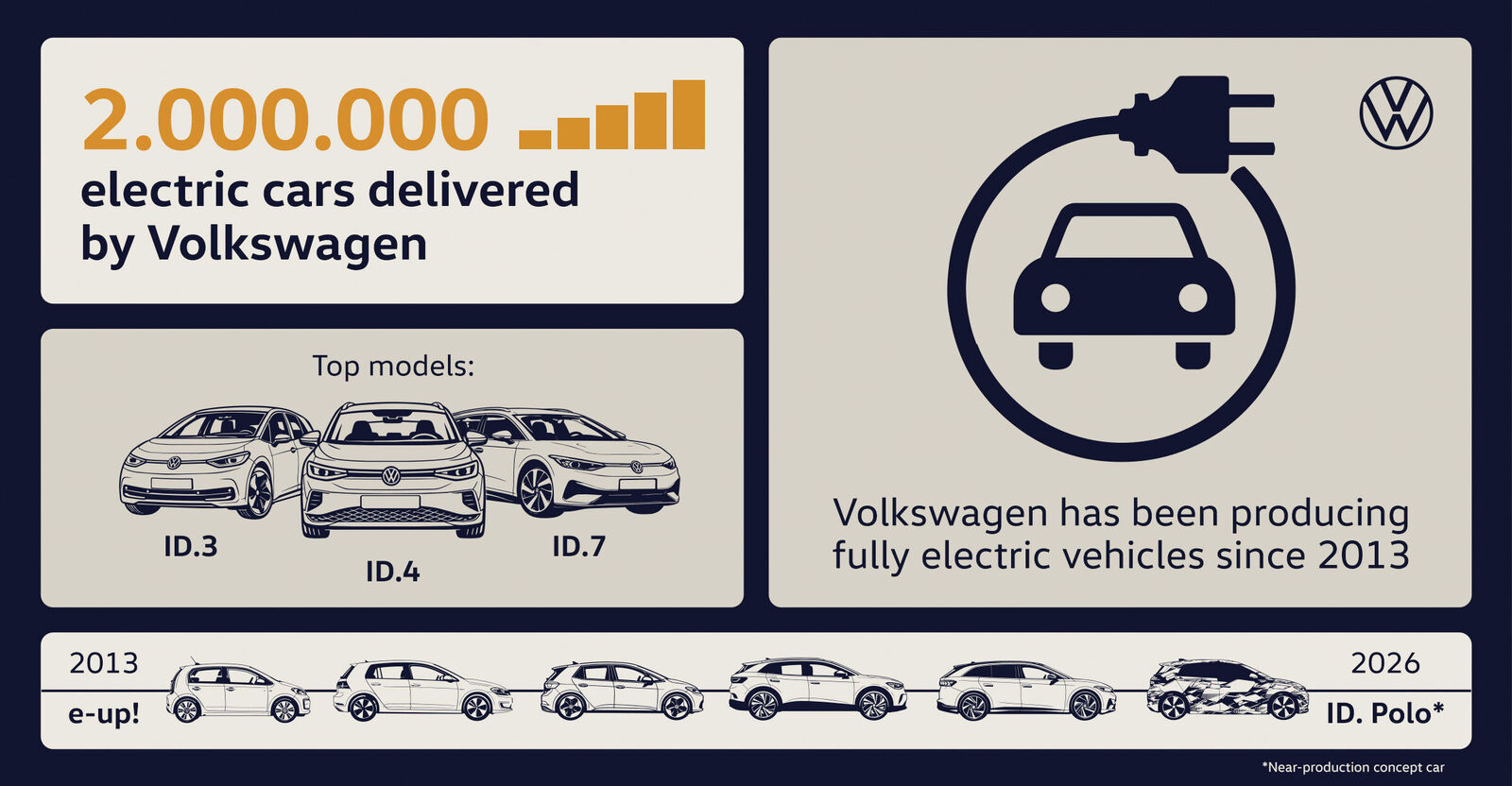
Volkswagen has taken a fairly straightforward approach to electric vehicles in the U.S. Rather than turning every model into an EV overnight, the automaker has built a separate ID family around electric power. For shoppers looking at volkswagen ev offerings, the current lineup gives them two very different choices: the ID.4, a conventional electric SUV, and the ID.Buzz, a much larger and more distinctive electric van.
That difference matters. The ID.4 is the easier fit for someone who wants an EV that feels familiar in size and everyday use. The ID.Buzz is aimed at buyers who need more passenger and cargo flexibility and don’t mind driving something that attracts attention.
What Volkswagen EVs Are Available?
For the 2026 U.S. model year, Volkswagen’s electric lineup centers on the ID.4 and ID.Buzz. The ID.4 is a five-passenger SUV, while the ID.Buzz takes the form of a three-row electric van with seating for up to seven.
They serve different purposes.
The ID.4 makes sense for a driver who normally shops for an SUV such as a compact or midsize crossover. It has a conventional footprint, useful cargo space, and seating for five. Volkswagen lists up to 64.2 cubic feet of cargo space with the rear seats folded.
The ID.Buzz is the more unusual option. Its upright shape and design cues from the classic Volkswagen Bus give it considerably more personality than the average electric crossover. More importantly, the body style creates room for families and people who regularly carry passengers or bulky gear.
Volkswagen ID.4
The ID.4 is probably the easiest place to start when comparing Volkswagen EV offerings. It looks and behaves much more like a conventional SUV than the ID.Buzz, which makes the transition to electric driving relatively straightforward.
For 2026, Volkswagen lists a starting MSRP of $45,095 and an EPA-estimated range of up to 291 miles for the rear-wheel-drive ID.4 Pro. All-wheel-drive versions are rated at up to 263 miles, according to Volkswagen.
Performance
The ID.4 is offered with rear-wheel drive or available all-wheel drive. The choice is less about finding a radically different type of vehicle and more about deciding whether additional traction and stronger performance are worth the upgrade.
Electric power also changes the way the SUV feels from behind the wheel. The motor delivers its power without the gear changes associated with a gasoline engine, so acceleration is smooth and immediate.
For everyday driving, that characteristic is more noticeable than outright performance numbers. Pulling into traffic or accelerating from a stop feels effortless, and there is less mechanical noise than in a conventional SUV.
Battery, Range, and Charging
Range is one of the most useful numbers to look at when comparing the ID.4 trims. The 2026 ID.4 Pro and Pro S with rear-wheel drive are rated at 291 miles, while the AWD Pro, Pro S, and Pro S Plus are rated at 263 miles. Actual range will vary with temperature, driving style, terrain, vehicle load, and other conditions.
Most owners won’t need to think about charging every day. If the vehicle is parked at home overnight, plugging it in can become as routine as charging a phone.
For longer trips, DC fast charging is the more important consideration. Volkswagen says the 2026 ID.4 includes a two-year Electrify America Pass+ membership with Plug&Charge, giving new buyers access to a charging benefit designed around public DC fast charging.
The ID.4 can also use a NACS DC adapter at compatible Tesla Supercharger locations, giving owners another option when traveling.
Interior and Technology
Inside, the ID.4 takes a relatively clean approach. A standard 12.9-inch touchscreen handles much of the vehicle’s infotainment, while smartphone connectivity and digital displays help keep the cabin current. Volkswagen also makes IQ.DRIVE standard on the 2026 model.
The practical side of the ID.4 may be more important to many buyers than its technology. It seats five and provides enough cargo room for groceries, luggage, strollers, and the everyday items that tend to accumulate in an SUV.
That makes it a particularly straightforward choice for someone who wants an EV without moving to a dramatically different vehicle format.
Volkswagen ID.Buzz
The ID.Buzz is harder to confuse with anything else on the road. Its styling is a modern interpretation of the classic Volkswagen Microbus, but underneath the retro-inspired exterior is a contemporary battery-electric vehicle.
The big distinction is interior space. Volkswagen describes the 2026 ID.Buzz as a seven-seat vehicle, with three rows and substantial third-row legroom.
That makes the ID.Buzz interesting for families who have outgrown a five-seat SUV but don’t necessarily want a traditional full-size vehicle.
Performance
The ID.Buzz isn’t trying to drive like a sporty crossover. Its appeal comes from the combination of electric power, a spacious cabin, and a distinctive shape.
The electric drivetrain gives it the same basic advantage as the ID.4: smooth power without conventional transmission shifts. At the same time, its larger body and van-like proportions give it a different character on the road.
For buyers who prioritize passenger room over compact dimensions, that’s likely to be a worthwhile tradeoff.
Battery, Range, and Charging
Charging an ID.Buzz follows the same basic routine as other EVs. Home charging can cover most regular driving, while DC fast charging becomes more useful on road trips.
Volkswagen says the ID.Buzz can charge from 10% to 80% in about 26 minutes when using 200-kW DC fast charging under appropriate conditions.
As always, that number shouldn’t be interpreted as a guarantee for every charging session. Battery temperature, the starting state of charge, charger output, and other conditions affect how quickly an EV accepts power.
The ID.Buzz can also use a NACS DC adapter at compatible Tesla Supercharger locations, adding flexibility for longer journeys.
Interior and Technology
The cabin is where the ID.Buzz makes its strongest case.
Three rows give families considerably more flexibility than the ID.4, and the upright body makes it easier to carry people and larger items. Available features include wireless smartphone connectivity and charging, while Volkswagen also offers features such as an available glass roof and multiple seating configurations.
It isn’t simply a retro styling exercise. The ID.Buzz is designed around the needs of people who actually need more room.
What Is It Like to Live With a Volkswagen EV?
The biggest adjustment for a first-time EV owner usually isn’t driving. It’s charging.
With a gasoline vehicle, refueling usually means making a dedicated stop at a gas station. With an EV, charging can happen while the car is sitting at home, at work, or at a public charging station.
For someone with home charging, that can be a major convenience. Instead of watching the fuel gauge and planning a gas-station stop, the vehicle can be plugged in after arriving home.
Road trips are different. A long-distance drive requires some thought about where to charge and how long to stay there. That’s less of an issue for normal commuting, but it becomes an important part of trip planning when traveling hundreds of miles.
The good news is that Volkswagen’s newer EVs have access to more charging options than earlier models, including compatible Tesla Supercharger locations with the appropriate NACS adapter.
What Are the Benefits of Driving an Electric Volkswagen?
No Tailpipe Emissions
A battery-electric Volkswagen doesn’t produce tailpipe emissions while driving. That can be an advantage for buyers who want to reduce the direct emissions associated with their daily transportation.
It is worth remembering that an EV isn’t environmentally impact-free. Battery manufacturing, electricity generation, transportation, and the vehicle’s entire life cycle all matter. Still, eliminating tailpipe emissions is one reason people choose an EV.
Less Routine Powertrain Maintenance
Electric vehicles have fewer moving parts in their powertrains than conventional gasoline vehicles. There is no engine oil or traditional engine maintenance to deal with, although EVs still require attention to tires, brakes, fluids, suspension components, and other systems.
Regenerative braking can also reduce how frequently the friction brakes are used.
Quiet, Immediate Power
The driving experience is another reason people move to EVs. Electric motors produce power smoothly, without the vibration and shifting associated with a traditional gasoline drivetrain.
That doesn’t necessarily make an EV better for every driver, but it does give the ID.4 and ID.Buzz a noticeably different feel from their gasoline-powered counterparts.
Home Charging
For homeowners with access to suitable electrical service, charging at home can be one of the biggest advantages of EV ownership.
A driver can arrive home, plug in, and leave the vehicle to charge. By the next morning, the car may have enough energy for the day’s driving without a separate stop at a charging station.
Of course, that advantage is less significant for people who live somewhere without convenient access to home charging. Those buyers should look carefully at nearby public charging options before choosing an EV.
Potential Incentives
EV incentives are more complicated than they once were and can change based on federal, state, and local rules. Eligibility can also depend on the vehicle, buyer, income, purchase arrangement, and other factors.
Rather than assuming a particular Volkswagen qualifies for a credit, buyers should check the current requirements before including an incentive in their budget.
Which Volkswagen EV Is Right for You?
The simplest way to compare the two is to think about what you need from the vehicle.
Choose the ID.4 if you want a conventional SUV layout, seating for five, a useful amount of cargo space, and a relatively easy transition into EV ownership. Its 291-mile EPA-estimated range in rear-wheel-drive Pro form also makes it a practical choice for drivers who regularly cover longer distances.
Choose the ID.Buzz if passenger space and personality are higher priorities. With seating for up to seven and a much larger, more flexible cabin, it occupies a space that the ID.4 simply doesn’t.
Price will also matter. The ID.4 starts at $45,095 for the 2026 model year, while the ID.Buzz occupies a different part of the market. Buyers should compare the trims and equipment that actually fit their needs rather than comparing base prices alone.
Frequently Asked Questions About Volkswagen EV Offerings
What electric vehicles does Volkswagen offer?
In the U.S. for the 2026 model year, Volkswagen’s EV lineup includes the ID.4 electric SUV and the ID.Buzz electric van. The two models are aimed at different buyers, with the ID.4 emphasizing everyday SUV practicality and the ID.Buzz focusing on passenger and cargo flexibility.
How far can a Volkswagen EV travel on a full charge?
The answer depends on the model and configuration. For 2026, the ID.4 Pro with rear-wheel drive has an EPA-estimated range of 291 miles, while the available AWD versions are rated at 263 miles. Real-world range can be lower or higher depending on conditions.
How long does it take to charge a Volkswagen EV?
Charging time depends on the vehicle, charger, battery level, temperature, and other factors. Home AC charging is best suited to longer periods such as overnight, while DC fast charging is intended to add a significant amount of range during longer stops. Volkswagen says the ID.Buzz can charge from 10% to 80% in about 26 minutes with 200-kW DC fast charging under suitable conditions.
Can I charge a Volkswagen EV at home?
Yes. Home charging is one of the most practical ways to use an ID.4 or ID.Buzz. Charging speed depends on the electrical equipment and charging setup installed at the home.
Can Volkswagen EVs use Tesla Superchargers?
Compatible Volkswagen EVs can use participating Tesla Supercharger locations with a NACS DC adapter. Availability depends on the vehicle, adapter, charger, and location. Volkswagen provides specific guidance for using the adapter.
Are Volkswagen EVs eligible for tax incentives?
Eligibility depends on the specific vehicle and the rules in effect when you buy or lease it. Federal, state, and local programs can have different requirements, so buyers should verify current eligibility rather than relying on an older incentive amount.
The Bottom Line
Volkswagen’s current EV strategy in the U.S. is easier to understand when the two models are viewed as separate solutions rather than variations of the same vehicle.
The ID.4 is the sensible choice for someone who wants an electric SUV that can handle commuting, family errands, and road trips without requiring a major change in how they use a vehicle. The ID.Buzz is more specialized. Its three-row layout, large cabin, and unmistakable styling make it a better fit for buyers who put passenger space and individuality near the top of their list.
For anyone comparing volkswagen ev offerings, the decision ultimately comes down to the type of vehicle you need, how you charge, how far you typically drive, and how much space you expect to use. Those factors will tell you much more than simply choosing the newest or most distinctive EV in the lineup.